
From the desk of Tiffany Rubin, owner of Nurse Next Door Re: COVID-19

We need and want to keep you up to date on all the information we have regarding the Coronavirus, or COVID-19. On March 12th, we had a meeting with the State of Delaware, and we are staying apprised of all updates through the Delaware Home Care and Hospice Association, the trade associations, the Delaware Office of Health Care Quality, and the Delaware Office of Health and Human Services. 

The Coronavirus (or COVID-19) can have far-reaching impacts, health included. We know that uncertainty causes stress, and that you may have concerns about the virus. Our goal with this blog post is to ensure you are up to date on all the steps we’re taking to keep our team and community safe.

We’re going to cover 5 things:

  1. Preparation in the case of the need for self-monitoring or an active virus situation
  2. What to do if you have symptoms
  3. What Nurse Next Door is doing for our staff and team, how we’re limiting exposure to you
  4. How to ask questions
  5. Planning for the what is next

Preparation in case of the need for self-monitoring or if you get the virus

We recommend preparing just like you already do for an emergency: Purchase and store two weeks’ worth of medications, food, water and basic supplies. We have included a list of items to make an EMERGENCY PREPAREDNESS KIT for your convenience. Ideally, you won’t need to use all your supplies but it is better to have it and not need it, than need it and not have it.

We are working on having a solution for those individuals that can’t/don’t want to go out to get the basics (like toiletries, paper towels and food) and will communicate that out to you in the coming weeks, should the need for it arise. 

What to do if you have symptoms:

Symptoms are very similar to the seasonal flu and include:

  • Fever
  • Cough
  • Shortness of breath

If you have mild symptoms: 

  1. Call your Primary Care Doctor and make them aware; they’ll direct next steps. Be aware that in Delaware, your doctor is NOT allowed to have you come into the office if you have symptoms of COVID-19 and will ask you to remain in your car so as to not contaminate or expose others.
  2. Limit your exposure to others. Do not go anywhere with large crowds and in fact, don’t go out of the home unless you absolutely need to.
  3. Wash your hands frequently.
  4. Use treatment as prescribed. Do not panic
  5. Tell Nurse Next Door. We need to ensure our staff are ready!

If you have severe symptoms (difficulty breathing, no ability to catch your breath): 

  1. Call 911 or go to your nearest emergency room

Our focus on well-being for our team and for you: 

Here are a few ways that we’re limiting exposure. 

  • We are educating our team with up-to-date and timely information multiple times per week and holding Q&A sessions so that constant communication and education is a reality. 
  • We have set up weekly ongoing scheduled Q&A sessions via Google Hangouts that you can join (more information below).
  • We are preparing for a variety of contingencies. We want this virus to simply go away. Since a chance of that happening is minimal, we are being sure to proactively consider the best ways to continue delivering services.

The guidelines currently show that treatment for COVID-19 is still administered at home and is mostly symptom management, unless signs and symptoms worsen. And like with any sickness, avoiding large crowds (including hospitals, where more sick people are) is advisable. We can and will still care for you at home if you are diagnosed with COVID-19. We will only stop caring for clients if the State of Delaware mandates it or our staff are unable to physically be present to provide care due to unavailability. Why might unavailability become an issue when we have a stellar record of no missed visits? 

Anyone that exhibits any symptoms has to be tested quickly in order to rule out COVID. In the instance that tests are unavailable to confirm COVID-19, precautions have to exist as if COVID-19 is there, to ensure minimal risk of exposure to others. If we don’t have that practice in place, then we could put you more at risk. We also acknowledge that staff availability may be limited by situations out of our control, such as school and daycare closures, which result in our staff being unable to go to work since they have to care for their family. Additionally, the personal protective equipment that staff need in order to care for our clients in the case of you having the virus is in limited supply, so should the COVID-19 spread in our community, we’ll have to ensure the protective equipment is used for the most urgent of cases. 

Again, please know that we’re having this discussion early to set the expectation of what may happen; at this point, NONE of these hypothetical situations have occured. We’ll continue to plan for the worst and hope for the best. 

How to ask questions:

  • Call 888.672.9028, 24/7. During the day this comes to our office; after hours it goes to our Care Services Team.
  • Call our office directly: 302.359.5661
  • Email caredelaware@nursenextdoor.com

Planning for what is next:

In the instance that services need to be reduced to protect you, consider what hours can be reduced temporarily. We will keep you up to date if and when the time comes to have this discussion. Because we are constantly aware of the most current recommendations, you do not need to proactively cancel services. If you are an essential services client, we will be actively working on a plan to ensure services go uninterrupted. We’ll continue to send out information as it becomes available to us; you can head to our website and click the “View Information Regarding COVID-19” to for the most up to date information. 

We are in uncharted waters; I can tell you that Allison, Amy, Dorrina, and I are working around the clock (literally) to handle and channel all the information that is coming in and deal with any specific situation that arises. You will ALWAYS get a response to a question, no matter how big or how small. We are here to Make Lives Better through it all. 

For More Information: 
COVID-19: What Does This Mean for You as a Client?

World Health Organization: Q&A on coronaviruses (COVID-19)

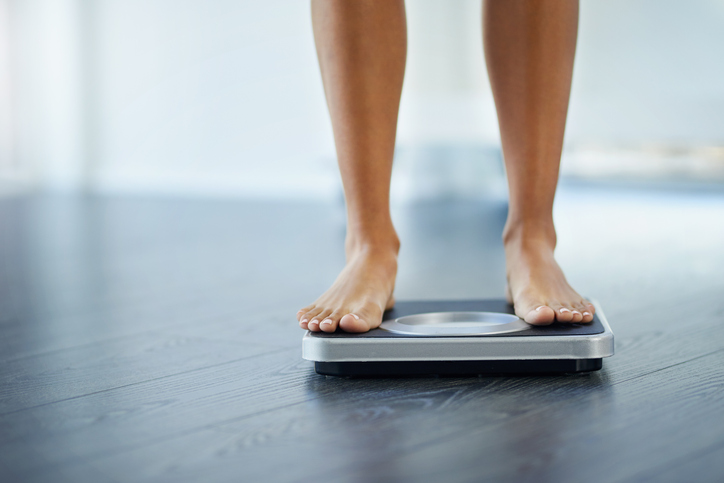
A New Way to Weigh: Get More from Your Scale

Disclaimer: this blog post is focused on achieving wellness and is not meant to replace any suggestions from your physician or healthcare team.

I struggled with weight during and after both of my pregnancies. It wasn’t until I worked with a registered dietician in Delaware and used a bio-impedance scale that I was able to focus on my overall wellness and take action steps based on my body’s data. After my first pregnancy, I had to go to the dietician’s office to do this. After my second pregnancy, I was able to get my own scale (they’re so affordable now!) and do everything from my own home. 

The right scale gives you real data, empowers you to make the right changes for YOUR body, and gives you actionable information for you and your healthcare team to focus on. Does this sound like your experience with a scale? Probably not. Here’s the issue with normal scales: They give you one single number–a weight. You don’t know if it’s good or bad. You don’t know what your body composition looks like, what part of it is muscle mass or what part is water weight.  What does this mean? It could mean that changes you make may not target the true route you need to take to be healthy! This is why I recommend a scale that has a bio-impedance ability to provide you with more data. It’s non-invasive and sends a small current through your body (no, you don’t feel anything) to get measurements. 

What is bioimpedance? Bioelectrical impedance assessment is a way to measure body fat, muscle mass and a variety of other aspects of body composition. 

Why use this kind of scale? 

  • It gives you real data like muscle mass, visceral fat, BMI, and water percentage (this means it is specific information directly related to YOUR body).
  • It gives you actionable information to take to your doctor or Registered Dietician.
  • It gives you empowerment on how to change your lifestyle. 
  • It’s convenient! You can send your information via text or email. Create an accountability group with your sister, share with your doctor or just keep it for you

A few quick tips:

  • ALWAYS use the scale barefoot, or it won’t be able to do anything but take a general weight (i.e., no additional data).
  • You WILL need a smart phone if you want to share your information directly via text or email.
  • It is NOT difficult. I had mine out of the box and a profile set up in under 5 minutes.
  • You CAN use the same scale for multiple people.

What do I do if I get a scale? 

Don’t assume you know what to do with the information. The internet is a beautiful and scary thing, depending how you use it. While degrees don’t make people smart, they DO provide a level of expertise you’re not going to get by searching by yourself on the internet. Request a referral from your doctor for a registered dietician or if you’re in Delaware, contact my gal, Wendy Gibson at Contemporary Nutrition. Don’t be afraid to interview your dietitian to be sure they understand what you’re looking for. For instance, it’s important to me that I get real feedback from my dietician on how to adjust my lifestyle for health AND sustainability. I need realistic goals, because I’m going to eat pizza. And who wants to go a lifetime without eating pizza?!

I wish you the best as you find a new “weigh” to wellness!

Learn more about Nurse Next Door Delaware at: nursenextdoordelaware.com

Voting for Seniors: Know Your Options

Voting. It is the quintessential way in which Americans participate in their democracy. For some citizens, particularly the aging or homebound demographic, getting to the polls to cast a ballot can be a challenge. But it doesn’t have to be! If you’re a senior (or a caregiver!), read on for some tips and resources to ensure your vote is counted and your voice is heard. 

Register

Before we delve into ways to cast a ballot, let’s not assume that everyone interested in voting is actually registered to vote. If you’re not registered, it’s never too late to cast your first ballot. The Aging Care website outlines different ways to register. You can also search online for your state’s specific instructions for voter registration. For our Delaware residents, the Department of Elections provides a variety of ways to apply.

Casting Your Vote

Mark your calendar for your state’s Primary Elections. Delaware’s Primary Elections are Tuesday, April 28, 2020. Now is the time to plan! If you’re able to go by car, you may want to consider asking a friend, family member or caregiver for a ride. Make it a date with a stop for breakfast, lunch or dinner! The General Election is Tuesday, November 3, 2020.

There are also many ride options for helping you get to the polls. Smart phone apps such as Uber and Lyft offer discounted and free transportation to the polls (depending on location), but using a smart phone and setting up a ride share app isn’t always feasible. No worries! There are a number of services that can arrange ride-share transportation on your behalf. 

If you are ill or homebound and cannot physically go to a polling place, apply now for an absentee ballot. All states allow some form of absentee voting. You’ll want to note 2 important dates: (1) The deadline for applying for an absentee ballot and (2) the deadline for submitting an absentee ballot. 

Delaware requires residents to submit an “Affidavit for Absentee Ballot” and provide a reason for voting as such. All absentee ballots must be received by the Department of Elections Office for your county no later than the closing of the polls at 8 p.m. on Election Day.

“Pinkifying” the Polls

Nurse Next Door Delaware’s Caregivers are ready to make sure their clients can cast their votes! We like to call it “Pinkifying the Polls” as we shower our trademark pink on the voting process. We‘re helping clients ensure that their vote is counted whether we take them to their polling place, arrange for transportation, or guide them through the absentee ballot process. If you’ve been thinking of care for yourself or your loved one, know that Nurse Next Door Delaware’s Caregivers embrace all aspects of care, including helping clients carry out their civic duty.

Learn more about Nurse Next Door Delaware by visiting nursenextdoordelaware.com.

5 Reasons You Want to Work at Nurse Next Door

” Be somebody who makes everybody feel like somebody.” – Kid President

I keep this framed title and quote on my desk. It’s the first thing I see when I start to work (besides my Anne of Green Gables mouse pad). It’s integral to my personal values, and it’s integral to Nurse Next Door. When you care about people, you care about all people. At Nurse Next Door, the care we deliver to our clients begins and ends every day with how we care for our own. Internally, we make it a priority to create and maintain a supportive culture in which our Caregivers can thrive. When they’re at their best, our service to our clients is at its best.

You have a lot of options. Why work at Nurse Next Door Delaware? I’ll give you 5 reasons. 

Little Things Make a Big Difference

You CAN do the little things that make a big difference because we give you the resources to make it happen. Sometimes we team up with the seniors’ Dream On Foundation to grant dreams for our senior clients. It could a grand gesture(see video below), but usually it’s the little things that matter on a day to day basis. For example, we give stipends so you can pick up a cupcake for your favorite client (who is not diabetic, of course). We exist to make lives better. This is what our Happier Aging philosophy is all about. 

Take a look at what our clients and team members have got to say about Nurse Next Door Home Care Services in Delaware!

1 on 1 Care

It’s 1 on 1 care. Not 10 on 1. Not 5 on 1. 1 on 1. A couple might make it 2 to 1. Our Caregivers can focus on their clients and provide highly customized care for them to meet their personal preferences. 

When we pair our Caregivers with clients, we strive for a Perfect Match. We try to match both parties’ needs, interests and personality.  Having compatibility as a foundation allows our clients and Caregivers to build rapport and form stronger bonds! 

Caregiver consistency is also a top priority for us so that our senior clients always have a friendly and familiar face every single visit.

Autonomy

It’s not for everyone. In fact, if you require complete structure, this may not be the best environment for you. If you always find ways to improve your work environment, enjoy the ability to affect change, and are proactive, this is a place where you will thrive. Take a look at the 10 Things that require zero talent (a list we talk about and hold our team accountable to). We set our people up for success and also encourage a culture of self-leadership. We believe in Caregiving as a Career and so there are opportunities for growth with the company too!

License Oversight

In order to renew a CNA license, your ‘worked’ hours must be supervised by an RN. As a skilled home health agency, we have the certification to supervise, so the hours you work support your license renewal. This isn’t the case if you work at a Program Approved Service Agency (PASA), because you are not overseen by an RN. With a career at Nurse Next Door Delaware, you only need one job to support your professional CNA license.

Benefits

We focus on ways you can make a career with us, so we offer a benefits package to help you create one.

Pay based on experienceIRA Matching
Full-time and Part-time rolesTravel Stipends
Paid Time OffSick Time
2 Holiday per year Commitment (not every other holiday, but a total of 2 holidays per year)Paid Parental Leave (maternity, paternity or primary and secondary, depending on how you structure your life)
6 Opportunities for Performance-based bonuses throughout the yearRetention Bonuses
Uniform ProvisionRegular Employee Surveys

Rosalie, one of our Caregivers shares why she loves working for Nurse Next Door Delaware.

Join Our Delaware Team

The care we give to our team ultimately touches the clients for whom we care, that’s why we’re passionate about supporting and nurturing our family of Caregivers. Are you or someone you know a kind, caring individual who wants to make a difference in the life of a senior? We can’t wait to connect with you! Give us a call at (302) 359-5661 to learn more or complete an online application:

Apply for Delaware Jobs HERE

Apply for Other Locations HERE

FAST FACTS

  • Nurse Next Door Delaware opened in 2013 in Kent, later expanding into New Castle and Sussex counties in 2015
  • Nominated for Delaware Corporation of the Year in 2015
  • Awarded Top Employer in Delaware in 2018 and 2019

Learn more about Nurse Next Door Delaware by visiting our site.

Seasonal Affective Disorder in Seniors During Winter

Seasonal depression is real, and it can be intensified with age as we face health challenges, loss of loved ones, and changes to daily routines that don’t serve us like they once did. Seasonal depression, better known as Seasonal Affective Disorder or SAD (the irony of the acronym is not lost of me!), affects millions of people. While there’s no one confirmed cause leading to SAD, there are a few factors that could increase your chances of having SAD. There could be special circumstances or varying degrees of factors, so be sure to consider these in the context of your own situation. According to the National Institutes for Health, common risk factors for Seasonal Affective Disorder include:

  • Being female. SAD is diagnosed four times more often in women than men.
  • Living far from the equator. SAD is more frequent in people who live far north or south of the equator. For example, 1 percent of those who live in Florida and 9 percent of those who live in New England or Alaska suffer from SAD.
  • Family history. People with a family history of other types of depression are more likely to develop SAD than people who do not have a family history of depression.
  • Having depression or bipolar disorder. The symptoms of depression may worsen with the seasons if you have one of these conditions (but SAD is diagnosed only if seasonal depressions are the most common).

In addition to having common risk factors for Seasonal Affective Disorder, there are other reasons that seasonal depression may be amplified for you: 

Situational

As we get older, life changes happen in our relationships. Beloved friends and family pass away and memories of great times make us nostalgic. Acknowledge why you might be sad or depressed and don’t feel bad about it. Know that you can make different memories today. Situational depression is usually short-term. 

Physical and Mental

I pair these together because our physical health affects our mental health and our mental health affects our physical health. If you can’t get out of bed because you’re feeling depressed, then your physical body starts to decline. Without moving around, muscles atrophy. We don’t eat right, we don’t sleep well, we don’t stay hydrated, we become isolated. And this fuels our depression. 

Genetics

There is a difference between genetic depression and situational depression brought on by environment or life events. Situational depression usually starts as something acute (short-term) but can grow into something long-term if not addressed. While genetic depression may be worsened by a change in season, it is not something that can be cured simply by changing an outlook. If it’s genetic, it may require some extra assistance, i.e. medication, so that you can achieve a great quality of life. 

What to Do

If you’re recognizing a seasonal pattern in your mental wellness, you may suspect that you’re suffering from Seasonal Affective Disorder. Here are some steps you can take:

1. Get your hormone levels checked. Low testosterone levels are a huge factor when it comes to feelings of depression. Also, a key contributing factor to SAD may be an overproduction of melatonin. 

2. Ask yourself what kind of depression you may be dealing with; self-assess, but don’t self-diagnose (there are doctors and nurse practitioners for that)! By self-assessing based on the information above, you can be prepared to have an effective conversation with your primary care provider the next time you see them. Being familiar with what kind of depression you may be dealing with can help you be an engaged participant with your care provider in developing a plan to address it. Here is a tool to help you prepare.

3. Don’t do anything in a vacuum. While any step is better than none, thinking that any one step is going to make you feel 100% better isn’t realistic. Look at your situation holistically and then make a plan (Or have someone else make a plan for you! Call us!). 

Example of a Plan

Physical Goal – Take a 10 minute walk 3 times per week

Mental Goal – Meditate once a week

Sleep Goal – Go to bed by 11pm. Some of the biggest factors to effective sleep are how long you sleep, a consistent wake up time, how much time it takes you to fall asleep, and how long it takes you to leave bed.

Eating Goal – Eat at least 1 serving of fruit and vegetables every day for starters. For guidelines on what you should work up to, ChooseMyPlate.com is a fun and easy tool to use. 

Medication Goal – If I need medication, I will take it consistently. I will ask my doctor about any interactions my medications may be having that contribute to my feelings of depression. (We are huge believers in not jumping to medications, but they do have a time and place and when used effectively, are irreplaceable. But make sure you don’t go right from “I’m depressed” to taking meds without addressing the root causes or other contributing factors, as it may have a much more limited effect and cause unnecessary side effects.) 

Once you receive an informative diagnosis and/or prescription from your care provider, there are medication management tools you can utilize at home to keep you on track with all your medications.

Other To-Do Tasks:

I will get my hormone levels checked.

I will TELL SOMEONE about my plan! If there is no one checking on me or holding me accountable, will I get it done? (A superhuman it might, but for the rest of the world, we need someone to check on us and encourage us.)

I will put on some music. Music has a lot of power. I may not want to be around anyone, so I will welcome the positive vibrations that come from music. (And look no further than this Happiness Playlist! )

Some other ideas for goals: Learn how to use social media, visit a place that you love, find a new kind of routine with small pleasures (i.e., a new kind of tea you can drink every morning). Here are some tips on alleviating senior isolation and depression that would be helpful as well!Dementia Home Care

What To Do If You Suspect Seasonal Affective Disorder in a Loved One 

You can tell them to cheer up, but it probably won’t be well received. We all have bad days. And the platinum rule (“Treat others the way they would like to be treated.”) is probably the best approach. Some good questions you could ask them:

“Do you want to talk about it?”

“What makes you feel happy?” 

“If it can change your quality of life and make you feel better, would you consider creating a game plan?”

(Then use the goals template above to create some goals for them.)

Start small. If you have never worked out in your life and decide to go to the gym every day, you’ll burn out and most likely revert to where you started. But if you start with one day a week, it’s more manageable for your body to adapt. Habits start small and are formed by consistency. In the same way, start small with how you help someone. This month, maybe it’s fresh flowers once a week. Next month, maybe it’s sharing a meal with them and eventually taking them out to an event. Be genuine. Be authentic. No one wants to feel like a charity case. 

**Depression is a real issue. Seek change and go to your primary care provider for help. If you had or are having suicidal ideation, call 1-800-273-8255. Don’t stop yourself from getting help because you feel ashamed, feel bad, or don’t want someone to think there is something wrong with you. You’re here, and you matter. If there is ever a time when you are not ‘taken seriously’, we will help you find a provider who can assist you.

Whatever season find yourself in, I hope you will use all the tools and people in your life to make it one of happiness and joy so that tomorrow it will be worth remembering. “Happy Season” to you and your loved ones!

Nurse Next Door’s home care services can support Mom or Dad’s independence and happiness. Give us a call, toll-free at +1(877) 588-8609 to learn how we can help you today!

Learn more about all the ways Nurse Next Door Delaware can assist you and your family by visiting nursenextdoordelaware.com.

Design a site like this with WordPress.com
Get started